

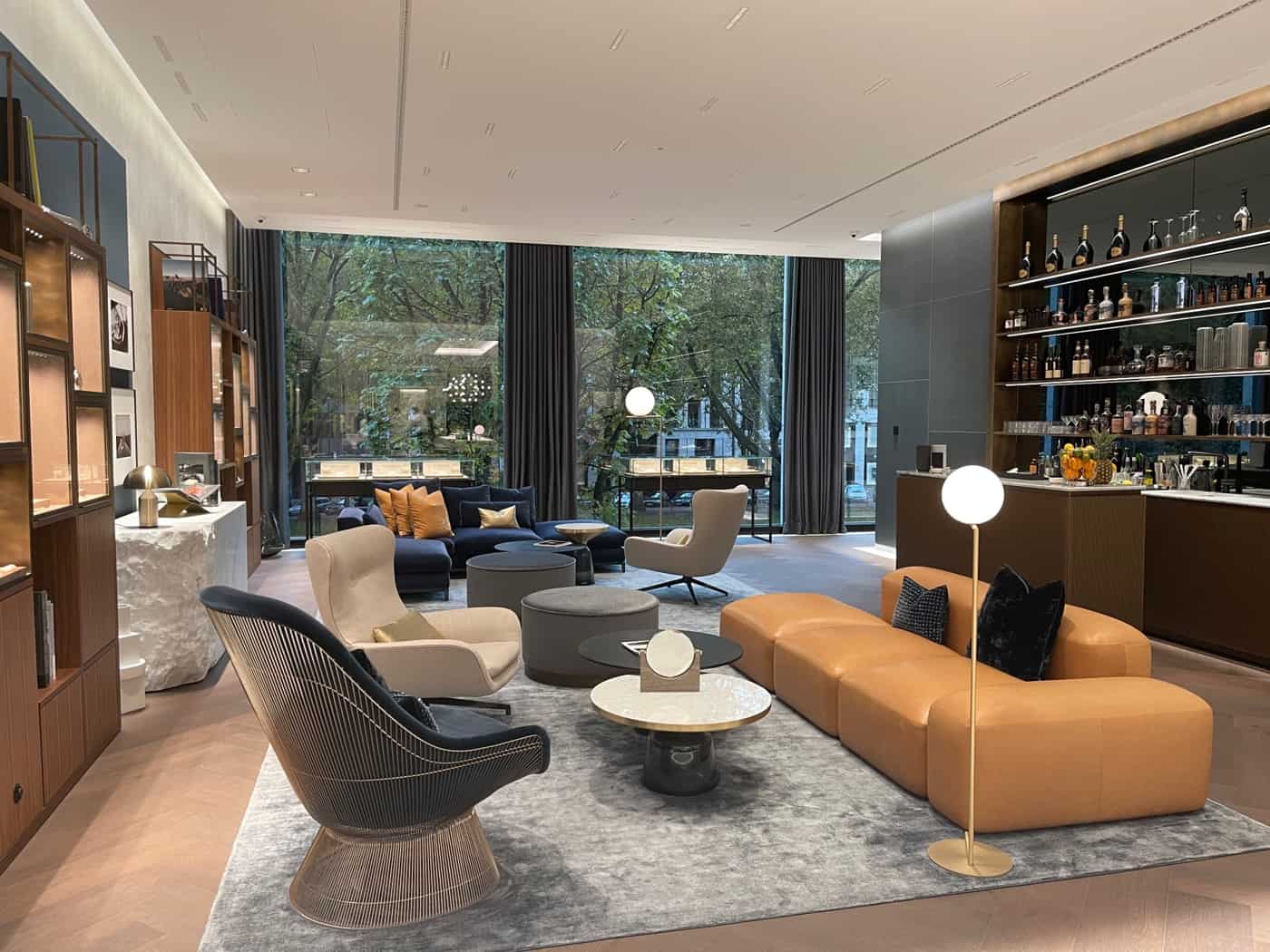
With their fine materials, elaborate architecture, and meticulous staging, watch boutiques create an atmosphere that powerfully conveys the history and aspirations of each watch brand. Staff, too, usually know and love their products down to the smallest detail.
But this is precisely where a surprising contradiction emerges: while the in-store experience regularly impresses, attention to the customer routinely ends the moment they leave the boutique. Data capture, follow-up, and long-term customer care remain patchy in many places. This was also revealed by a recent study from Iskander Business Partner, a management consultancy specializing in CRM, which examined the watch trade through 25 expert interviews, more than 40 mystery shopping visits, and test purchases worth around €175,000. We already reported on that study.
Now we wanted to know more, so we asked Armin Iskander, the company’s CEO and founder, for an interview. Speaking with Uhrenkosmos, the self-declared watch enthusiast explains why the industry often knows its products better than its customers, where revenue potential is being lost, and why a love of watches should go hand in hand with a love of customer management.

Uhrenkosmos: Mr Iskander, before we talk about CRM systems, customer value and sales processes, what is your personal relationship with mechanical watches?
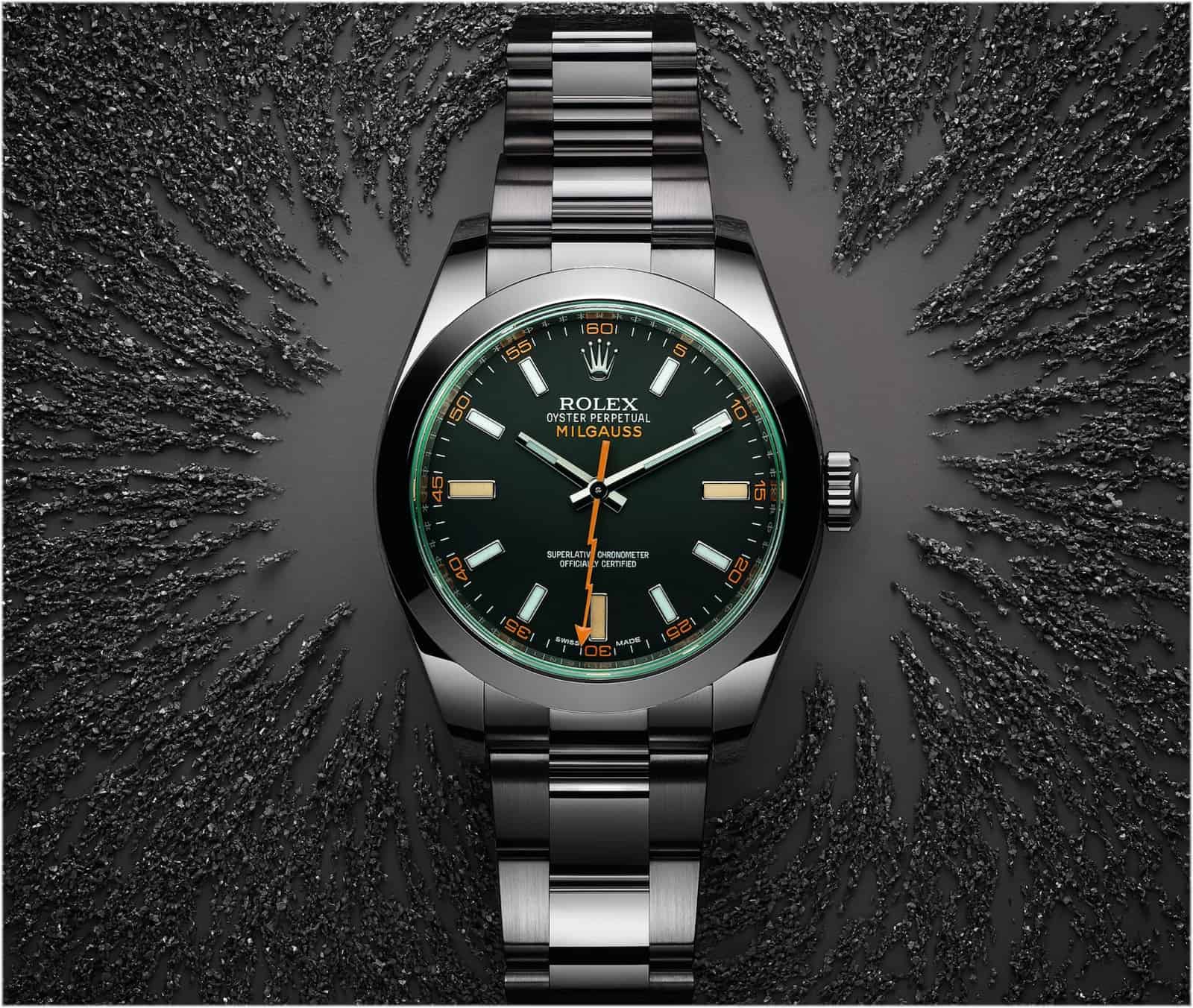
Armin Iskander: Until I was 25, I wore exactly one watch: a radio-controlled Junghans Mega Solar. When it broke beyond repair, the industry would not sell me the watch I wanted – a Rolex Milgauss. The waiting time was two years. After that, I did not wear a watch for 30 years; my smartphone took over. In retrospect, the industry left a customer lifetime value of at least €30,000 on the table. About a year ago, I returned to watches. The fascination with mechanical functions had never entirely left me, and I now thoroughly enjoy the hunt for my grail watches.
Uhrenkosmos: This personal passion evidently also fed into a study of the watch market. It involved not only numerous conversations and boutique visits, but also the purchase of a considerable number of watches. How did you experience these situations as a private watch enthusiast, and when did the professional perspective of the management consultant take over?
After the third boutique visit, I began looking at things through my professional lens.
One example involved an Omega boutique that did not offer appointments on Saturdays, even though it was open – despite the fact that an appointment request signals greater purchase intent than a walk-in visit. The replacement appointment during the week was then unknown to the boutique, and in the end, the sales associate could not explain how to set the Omega Worldtimer.
Follow-up or any attempt to record my personal details or interests? None whatsoever. Instead, I was told to write down the reference number myself. Privately, I was fascinated by the watch; professionally, I was appalled by the process. That experience stayed with me.

Personally, the watch thrilled me. Professionally, the process shook me.
Was the overall picture surprising? What surprised you most?
There are three core findings:
First, there is the classic execution problem: the customer journey is usually well defined in theory, but it is not fully implemented in practice and is only rarely personalised and genuinely tailored to the individual customer.
Second, the quality varies dramatically between the different stages. Everything before the boutique visit – research and appointment booking – scores only two or three stars on a five-star scale. The in-person boutique appointment, by contrast, is almost always a five-star experience. At Vacheron Constantin, the visit was almost perfect; the same could not be said of Audemars Piguet.
Afterwards, however, the quality of the follow-up falls back to an average of one or two stars. Multi-brand retailers performed best in this area.
Third, manufacturers almost completely overlook the fact that the pre-owned market is also part of the customer journey. Only a few, such as Rolex with its Certified Pre-Owned program, have addressed this systematically.
Uhrenkosmos: How do you explain the contradiction that many watch boutiques operate at the highest architectural, design and technical level, yet the customer often disappears from view once the visit is over?
Armin Iskander: Boutiques love their brands and their products – but they do not love their customers to the same extent.
I see several reasons for this. Many manufacturers still think in terms of distribution rather than sales. I know this transition from the mobile communications industry; it is difficult but necessary. CFOs are also still more interested in margins and sell-through than in customer value. Airlines, by contrast, have understood that a young frequent flyer may offer more future potential than one approaching retirement.
One example from our mystery shopping involved a multi-brand jeweler that rejected an existing customer’s request to spend a further €100,000. This was although the customer had already generated €120,000 in annual sales, had mentioned competing offers, and was willing to accept a generous delivery timeframe.
A competitor that had generated only €30,000 in sales from the same customer during the previous year recognised the potential and made the deal happen. The first jeweler unnecessarily brought a competitor into the relationship – probably because its internal processes did not prioritise future customer potential, or because the salesperson responsible sat too low in the hierarchy to act entrepreneurially.

At what point does contact with the customer usually break down in a watch boutique? And why, as your mystery shopping repeatedly showed, does the trade so rarely succeed in bringing walk-in customers into a structured sales process? Is there no binding routine, or is the industry reluctant to combine luxury with seemingly mundane sales processes?
Sales and customer understanding require work – and for sales staff, that work does not feel like a five-star activity in the same way as a pleasant conversation with a customer. The difference between fine dining “in front of the guest” and the work taking place “in the kitchen” describes it quite well.
Many boutique employees have not yet internalised this distinction. At the same time, boutique operators often fail to provide them with the necessary tools. These range from corporate WhatsApp accounts to simple digital aids, such as a voice mark recorded after the meeting that is then transferred automatically into the CRM system.

Do the figures reveal clear differences between brand-owned boutiques and major multi-brand retailers such as Wempe, Bucherer or Rüschenbeck, or is the pattern broadly consistent?
Brand boutiques face an unresolved fundamental issue: why should I buy without a discount when the same watch is available online or from a multi-brand retailer at a significantly lower price? In one interview, a salesperson openly advised us to buy the watch from a multi-brand jeweler rather than from his own boutique.
In my view, the answer is not limited boutique editions, but clear channel discipline. Customers increasingly arrive at boutiques well-informed. When we demonstratively opened Chrono24 on a tablet during an appointment, several salespeople reacted with irritation. That is understandable, but it is not a strategy for the future. Full price transparency is a reality. The industry needs new concepts for maintaining pricing power rather than blanket responses such as, “We do not offer discounts.” Dynamic pricing is already well established in other industries.

Uhrenkosmos: Is the underdeveloped state of customer management a problem specific to the watch industry, or a broader weakness of the luxury sector?
Armin Iskander: The maturity of customer management in the watch industry clearly is behind other markets, including other luxury segments.
Hapag-Lloyd, for example, markets luxury cruises far more actively without appearing pushy. The relationship between the brand, the customer, and the product feels noticeably more balanced there.
You know the automotive industry very well. Not everything is perfect there either. Even so, what does the car trade do better in CRM and the customer journey?
There is considerable mistrust between jewelers and manufacturers over the question of who owns the customer. The automotive trade knows this problem too, because dealers do not necessarily want their customers to be registered directly with the manufacturer.
We have established intermediary systems in that industry in which the manufacturer communicates on behalf of the dealer without gaining access to the specific customer data. Applied to the watch industry, Breitling could, for example, send professionally produced image sequences via WhatsApp in the retailer’s name rather than leaving the communication to the often error-prone messages of individual salespeople. And car salespeople simply follow up more consistently.
Does this not mean that the watch industry is leaving substantial revenue on the table?
Definitely. In two or three cases during our mystery shopping, our tester seriously considered making a private purchase because the boutique experience had been so convincing. The customary family consultation prevented an immediate purchase, and because the boutique failed to follow up proactively, the money ultimately went towards a holiday rather than a watch.
Cross-selling is also rarely addressed. Multi-brand retailers such as Wempe, Bucherer and Rüschenbeck at least try to identify the interests of accompanying guests. In mono-brand boutiques, that is almost entirely absent.
Overall, I estimate that the long-term effect represents more than 20 % in potential additional revenue.

Boutiques love their brands and their products. The customer? Not quite as much.
The blind spot in customer management is unlikely to be equally large everywhere. Are there differences between segments and brands? And why is the importance of the customer journey often poorly understood even where CRM programs have long been established? Put differently, did the industry spend too long merely managing demand instead of selling?
Hardly any brand or boutique engages with the customer as a watch collector. They do not show customers the value of their watches or the service intervals across their entire collection, including watches from other brands. That is why collectors migrate to Chrono24, which has assumed precisely this role and provides suggestions that should really come from the brands themselves.
Loyalty benefits for a customer’s third or fourth watch from the same manufacturer? Almost unheard of. The industry’s widespread refusal to engage with wearables and smartwatches is another factor. Exceptions such as TAG Heuer are few and far between and have rarely been sufficiently successful.
The crucial issue is not so much competition from Apple or Samsung, but the shift in thinking it requires: away from one-off revenue at the point of purchase and towards recurring revenue and up-to-date customer data. This is a model that the software and media industries adopted successfully long ago.

Uhrenkosmos: What would a sound, professional boutique visit look like – from the customer’s perspective and from that of the brand or retailer? Could potential customers not be approached in advance and guided towards the jeweler more deliberately?
Rather than focusing on the drinks menu, one or more conversations should establish the customer’s budget, occasion, and personal context far more clearly. At Bucherer, for example, I was invited to complete my customer profile in the store while the watches were being brought out of the safe.
No jeweler has ever visibly recorded my wrist size or the materials best suited to my skin tone. Only one jeweler used my appointment request to review my website and LinkedIn profile in advance. The salesperson then guided the conversation exceptionally well towards topics that preparation alone could not have resolved.
In markets with less restrictive data-protection rules, such as the United Arab Emirates, this type of customer identification is already carried out digitally in the entrance area in some cases.

Selling means knowing what the customer wants — or better yet, anticipating those wishes.
I think it will eventually gain traction in Germany too. Which automatically raises the question of what AI will take over in the process – and what will remain the task of humans.
Trying the watch on remains central: the watch industry hasn’t nearly established the concept of „wearing feel“ the way the auto industry has established „driving feel.“ That’s also an opportunity to keep the rising Asian competition – which is increasingly strong in watches too – at a distance.
AI, by contrast, is very good at pre-filtering which models are even a fit-size, style, compatibility with an existing collection, and budget. This „next best offer“ logic has long been standard in many industries. On top of that, the industry still relies heavily on classic SEO, while customers are increasingly searching via AI systems – a channel that requires considerable know-how to engage with actively.
And looking further ahead, AI could reach even deeper into customers‘ lives: suggesting the right watch for the evening, matched to the outfit and the local security situation. Digital try-on processes, such as those offered by Cartier, would be an obvious starting point for this.

Uhrenkosmos: I see selling more as a general attitude: listening to the customer and guiding them towards the right watch. In many companies, however, customer management is treated primarily as an IT project and has not been internalised at all. As a result, customers are sometimes treated in a remarkably uninspired way. Is that Armin Iskander’s personal experience, or primarily a finding of Iskander Business Partner? And what is the best way to address it?
Sales-support systems such as Salesforce, Dynamics and HubSpot are appropriate and have long been available in many organisations. What matters, however, is extracting real value from these systems beyond their technical implementation.
That includes combining online data with information gathered during the in-store sales conversation – for example through a customer data platform such as Zeotap – and defining precisely tailored use cases.
Concrete recommended actions can then extend the salesperson’s existing enthusiasm for the product towards the customer and make it more effective. This creates a genuine buyer journey for the customer and makes it easier for the salesperson to build lasting enthusiasm for the company’s products. The CFO mentioned earlier also benefits: alongside short-term revenue, the company can record higher customer lifetime values and greater loyalty.
Turning all of this into reality requires experience, creativity, deep technological expertise and a genuine understanding of customers. Implemented properly and supported by effective training, the love of the product can quickly be joined by a love of selling and of the customer.
Ultimately, selling is nothing more than knowing – or, better still, anticipating – what customers want, offering the right solution at the right time, and ending with happy faces on both sides: the customer’s and the company’s.

Armin Iskander
About
Armin Iskander is the founder and CEO of the management consultancy Iskander Business Partner, which he launched in 2005. He studied computer science and business administration at the University of Dortmund. Before founding his company, he worked for, among others, Roland Berger and webmiles AG, and served as Managing Partner Germany at Accelate.
His professional focus areas are customer management, innovation, and digitalization. Among his personal passions, he lists entrepreneurship, diving, and exploring new subjects. For several years now, he has also once again been deeply engaged with mechanical watches and the search for his personal dream watches.


0 Kommentare