

Do you think watch brands know their customers? Especially those who, over the years, have built up collections worth seven figures? And that they discreetly approach them – as is standard practice in many other industries – to alert buyers and collectors to the right new model at the right time?
Well, many watch brands are capable of making outstanding watches. But sophisticated customer management and state-of-the-art CRM Customer Relationship Management are not exactly among the watch industry’s greatest strengths. This is remarkable considering that many watches cost as much as a premium automobile. Basic processes are often lacking in watch retail and brand boutiques – at a time when the economic slowdown is already weighing heavily on the industry’s outlook.
At first, this assessment may have been little more than a personal impression with a sample size of n = 1 – namely that of the author. But the picture changes when looking at a recent study by Iskander Business Partner on the customer journey in the luxury-watch segment.
Among numerous other findings, the study describes the experience of a collector who has purchased watches worth well over one million euros in recent years – not unusual among affluent customers with a cosmopolitan lifestyle – spread across several brands, boutiques and countries. Asked how often any of these brands had proactively contacted him after a purchase or an expression of interest to ask about his preferences, remind him of an upcoming service or recommend a suitable model, he did not have to think long: virtually never.

A customer of this caliber should be a potentially recurring and highly profitable source of revenue for any brand. Yet for most companies, the customer effectively disappears the moment he leaves the boutique. And as the study demonstrates, this is not an isolated case but rather the rule.
The watch industry currently spends a great deal of time lamenting declining sales. Rightly so. But comparisons with other sectors, such as the automotive industry, where vehicle prices often reach levels comparable with those of high-end luxury watches, show that existing sales potential is nowhere near fully exploited.
The customer journey is certainly not an unknown concept in watch retail and brand boutiques in 2026. But it is often not lived or successfully implemented. As a result, a significant amount of potential revenue remains untapped.

A Difficult Market
The raw numbers tell a clear story: the hype in the watch market is over, and 2026 figures are weak for both watch retailers and brand boutiques. The secondary market is subdued as well.
There are plenty of obvious explanations: weak consumer sentiment, economic uncertainty and additional factors such as the soft Chinese market or the consequences of erratic US tariff policy are all reducing consumers‘ willingness to spend. Together, these factors are causing painful revenue declines for watch brands.
But some of the industry’s problems are self-inflicted.
The price increases imposed by many watch brands have become increasingly difficult to justify and have far outpaced general inflation. Technically knowledgeable customers are also puzzled by steep increases in the prices of standard movements from Sellita, ValFleurier or ETA.
Arguments such as “a branded rotor” or “an exhibition caseback” offer only limited justification for substantial surcharges. Large brands such as Seiko, Casio and Citizen, as well as smaller players such as BA111OD or Zeppelin, demonstrate that buyers can still get a great deal of “watch” for a comparatively modest price.

Watch Retail and Brand Boutiques
Another significant issue is that many watch brands and their boutiques, as well as numerous retailers, are still living to some extent in the “good old days”. But the era when customers simply walked into a store and obediently joined a queue for a watch is over.
There is rarely anything to criticize about the way potential customers are treated while they are actually inside a boutique or jewelry store. Yet when it comes to maximizing sales potential, guiding customers through the customer journey, or collecting relevant customer data, the industry is often still a long way from where it could be.
Large parts of the sector are visibly struggling to shift from an allocation mentality to a sales mentality. Anyone who has spent years managing demand rather than generating it will inevitably find active selling difficult. And that becomes a problem as soon as customers stop appearing of their own accord.
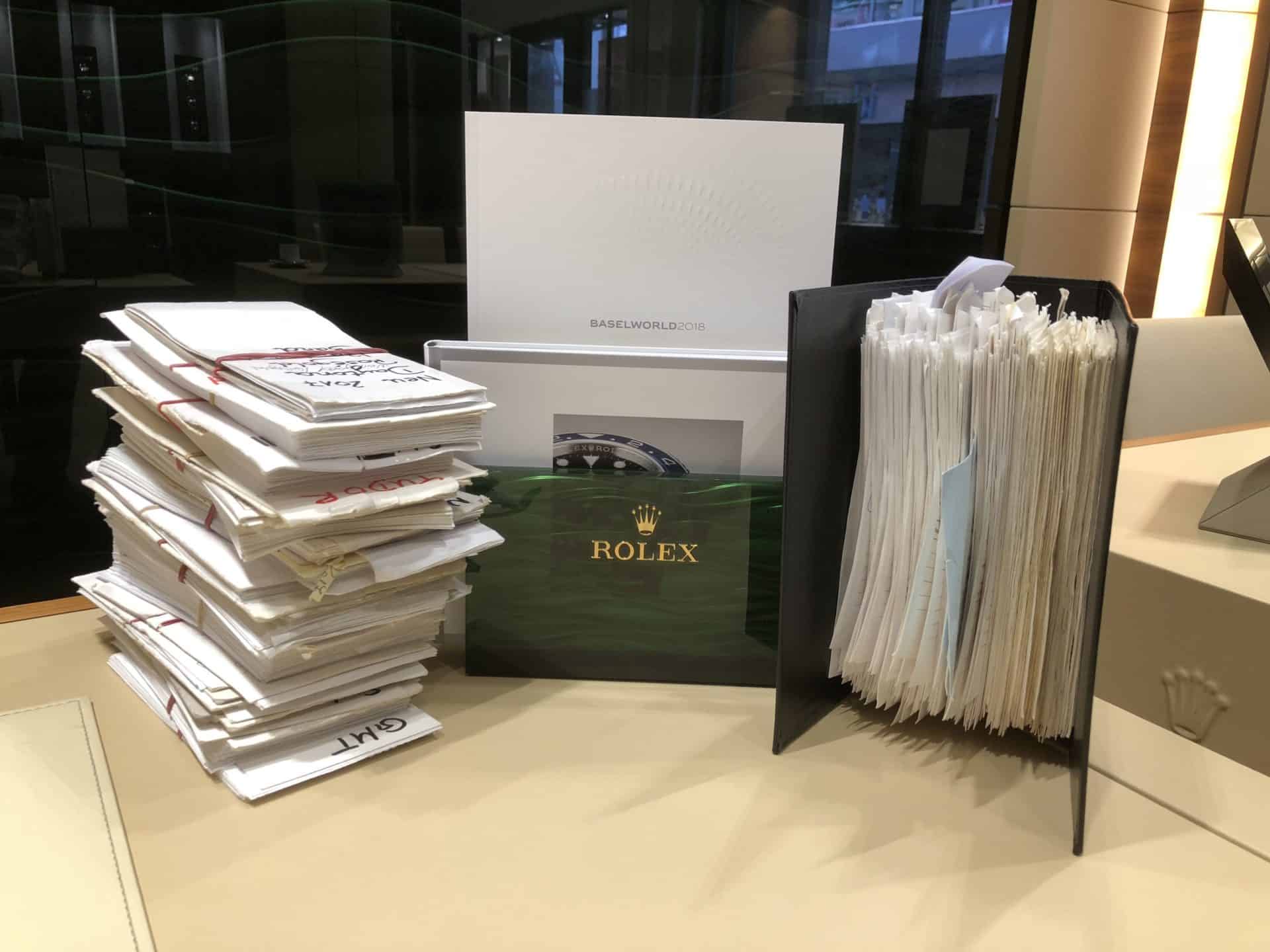
CRM and the Customer Journey
Of course, every industry occasionally leaves a customer feeling they were treated with only “restrained friendliness”. Conversely, there are positive surprises as well. But the crucial pain point lies elsewhere: after numerous watch purchases and countless sales conversations, anyone asking whether the watch industry is fully exploiting its potential has to conclude that it is not.
This impression, which industry insiders readily share in private, is confirmed by a larger study conducted by management consultancy Iskander Business Partner. Its findings point in the same direction: an industry accustomed for years to steering whatever quantity of watches it received toward interested customers finds it difficult to make the transition to active selling. Hardly surprising, given how cautiously the luxury sector has traditionally approached the concept of “active selling”.

Unfortunately True
One could argue that the results are merely coincidental. But more than 25 expert interviews, 40 mystery-shopping contacts, test purchases from seven brands worth €175,000, and product inquiries through online and boutique channels involving various manufacturers and retailers paint a remarkably consistent picture.
The research was conducted primarily in Germany and Switzerland, but also in Spain, Portugal, Argentina, and the United States. The qualitative analysis was carried out by Iskander Business Partner, a management consultancy specializing in CRM and customer journeys. Its focus was on the end-to-end customer journey, the assessment of CRM structures, customer-data collection, and follow-up communication.


An Imbalance
Across price segments, countries, and distribution channels, the picture is remarkably consistent: customers are welcomed professionally and courteously in boutiques, and virtually all sales staff are knowledgeable about watches, technology, and brand history.
Friendliness is not the problem. The problem is that, in most cases, the potential customer leaves the boutique exactly as they entered it: as an unknown individual. This means that one of the most basic sales disciplines fails: recording what the customer actually wants. In almost none of the consultations were preferences, wishes or details of the conversation systematically recorded, either digitally or on paper.
Without such documentation, personalized follow-up becomes structurally impossible, regardless of how good the consultation itself may have been. The customer goes home with the salesperson’s business card – while no customer data enters the system.

Specific Examples
In the study, Armin Iskander, founder and Managing Director of Iskander Business Partner, illustrates what this means in everyday business through numerous concrete examples. They are representative of a broader pattern across the industry and are not intended as criticism of individual retailers or brands. The brand names simply illustrate the underlying issue. Nor can one infer the overall quality of a brand’s retail operations from a single point-of-sale experience. There are undoubtedly significant differences between individual boutiques and locations.
At the same time, however, the study as a whole reveals similar gaps across numerous brands, retailers and independent jewellers. The names cited therefore serve merely to illustrate the broader problems uncovered.
For example, a mystery shopper visiting a Breitling boutique demonstrated clear purchase intent but had not yet reached a final decision. There was no subsequent contact – no telephone call, email or invitation to another appointment – even though such follow-up would have provided an obvious opportunity to continue developing the customer’s interest. Because this was a brand-owned boutique rather than an independent retailer, the watch brand itself had the opportunity to follow up. Instead, it relied on the customer finding his own way back.
Another recurring observation involved a Panerai boutique. For appointments booked in advance, where contact details were already available, follow-up did take place. But when customers spontaneously walked into the same boutique without an appointment, neither customer data nor a needs profile was collected. Customer data management therefore appears less like a structurally embedded sales practice and more like a process dependent on circumstance.

Money Left on the Table
Even where a clear intention to purchase existed, available customer information was hardly used. At IWC, for example, inquiries about models that were not in stock were answered by confirming their unavailability – but no alternative was suggested, nor was the customer invited to visit the nearest boutique. Despite concrete purchase intent, the customer journey therefore ended in a dead end. Yet the cross-selling potential during a personal visit is obvious.
At Omega, for example, staff did not ask whether a person accompanying the customer might also be interested in a watch. A typical example was the terse one-line response from Rüschenbeck to an online inquiry stating simply that a model was unavailable.
By contrast, in-person visits to both watch retailers and brand boutiques generally proved very positive. But without personalization or any assessment of the customer’s needs, there can be no meaningful next step.
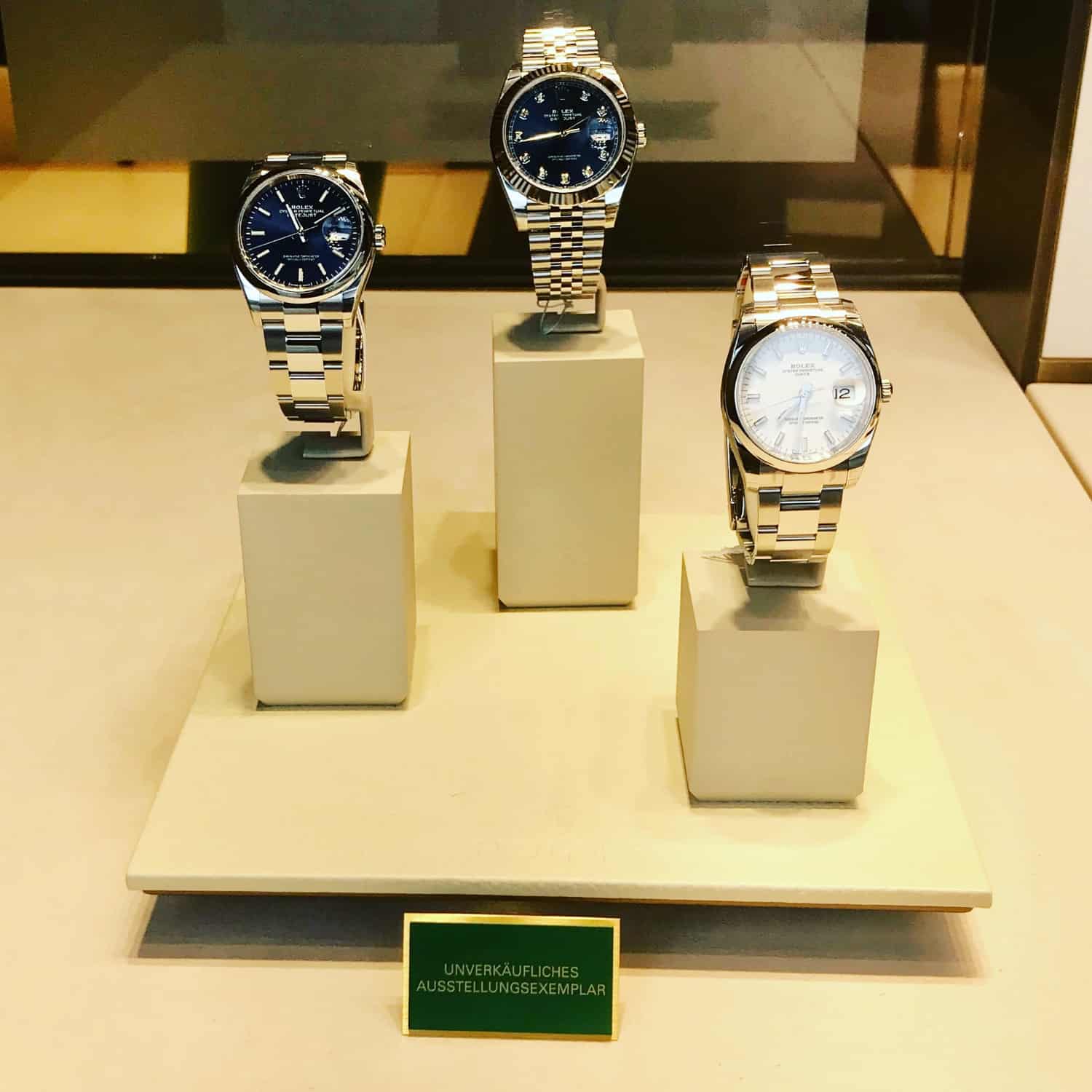
The Right Communication
Even when communication does take place, it often misses the mark. If, after examining a particular model, the customer’s inbox is subsequently filled only with untargeted mass newsletters, as observed with Wempe and Bucherer, the resulting purchase impulse is understandably limited. In one case, interest in a €70,000 men’s watch was followed up merely by an impersonal newsletter featuring a €2,000 watch together with uninspiringly presented women’s jewelry.
Why that does not fit hardly needs explaining. Digital touchpoints such as websites, configurators, and newsletters exist virtually everywhere. Yet they are rarely connected to structured lead or customer-data capture, meaning that valuable preference data simply disappears unused. In the fiercely competitive automotive sector, where the customer journey is comprehensively configured from pre-sales through point of sale to after-sales, such an approach would be unthinkable.
And there are plenty of opportunities for meaningful contact. A proactive service reminder, for example, would generally be perceived not as intrusive but as attentive customer care. Dropping off or collecting a watch after servicing also creates opportunities to introduce new models, sell straps, or suggest further gift ideas. The fact that these touchpoints remain largely unused across the industry represents an opportunity loss that few other sectors with comparable margins could afford.
Haute Horlogerie versus Core Luxury
Looking at the various data points reveals an overall distinction between Haute Horlogerie brands – such as Patek Philippe, Audemars Piguet and Vacheron Constantin – and the Core Luxury segment, which includes brands such as Omega, Longines, Oris, TAG Heuer, Breitling and Panerai.
According to the mystery-shopping experiences, the former already operates CRM at a higher level for their small and highly exclusive customer base. Even here, however, there is still a gap between the brands‘ promise of absolute luxury and the maturity of their customer journey and CRM processes.
In the Core Luxury segment, by contrast, where brands are currently under considerably greater economic pressure, the level of CRM maturity still offers substantially more room for improvement. This is precisely where more data-driven customer management could become an effective lever for differentiation from competitors. One thing is certain: any brand that truly understands its customer data can translate it into revenue far more effectively.

Outlook
None of these examples, and none of the brands mentioned, should be viewed in isolation. Nor can individual experiences provide a complete picture of a brand’s CRM activities. But when such a clear pattern emerges from the breadth and depth of all the conversations and interactions, it becomes reasonable to conclude that these are not isolated cases and that the underlying problem runs deeper.
Brand boutiques such as those operated by Jaeger-LeCoultre can also quickly find themselves having to explain why discounts may be available at a multibrand retailer but not in their own boutique. The market’s currently subdued performance is therefore hardly surprising.
It is the logical consequence of an industry that, for many years, benefited from above-average returns and scarcity management – and could afford to manage customers rather than win them. Now, in a crisis and under tougher market conditions, the pressure is considerable.
Yet the necessary adjustments and intelligent further development also offer a major opportunity to unlock additional revenue potential and grow faster than competitors. Especially when the basic prerequisite is remarkably simple: you need to know who the customer is – and listen to what they are telling you.
The collector mentioned at the beginning of this article, with his seven-figure investment in watches, would ask for nothing more.


Sources: Iskander Business Partner: Study on the Customer Journey in the Luxury-Watch Segment
Market Research
25+ in-depth interviews
40+ mystery-shopping contacts
Test purchases worth more than €175,000
Markets: Germany (five cities), Switzerland, Spain, Portugal, Argentina, and the United States
Research period: February–July 2026, ongoing
Brands
The study includes, among others, the following brands:
Patek Philippe, Audemars Piguet, Vacheron Constantin, A. Lange & Söhne, Richard Mille, Rolex, Omega, Jaeger-LeCoultre, IWC Schaffhausen, Breitling, TAG Heuer, Panerai, Swatch, Ressence, Grand Seiko and Lang & Heyne, as well as the retailers Bucherer, Wempe, Rüschenbeck and several independent jewellers.
Online
Additional brands analyzed digitally included Sinn Spezialuhren, Cartier, Longines, Baillod, Formex, Nivada, NOMOS Glashütte, Seiko, Hublot, Tissot, Casio, Garmin, Parmigiani and Zenith.
Iskander Business Partner
With annual revenue of more than €29 million, the management consultancy ranks among the larger owner-managed specialist consultancies in the German customer-management market. The company has offices in Düsseldorf, Munich, Hamburg and Zurich, employs around 50 people and has extensive expertise in telecommunications, media and automotive. Its better-known clients include Telefónica/O2, Vodafone, BMW, Audi, Sony, DHL/Deutsche Post, 1&1, Metro, RTL, ProSieben and E.ON.
Important Note
This article is based in part on findings from Iskander Business Partner’s study of the watch market, to which Uhrenkosmos.com was given advance access.


0 Kommentare